The Contest Selection Framework: How to Choose Between High-Entry, Low-Odds vs. Low-Entry, High-Odds Sweepstakes
You're staring at your phone, scrolling through sweepstakes on PlayOtter, and a question hits you: Should I enter this one?...
PlayOtter Team
Sweepstakes Experts
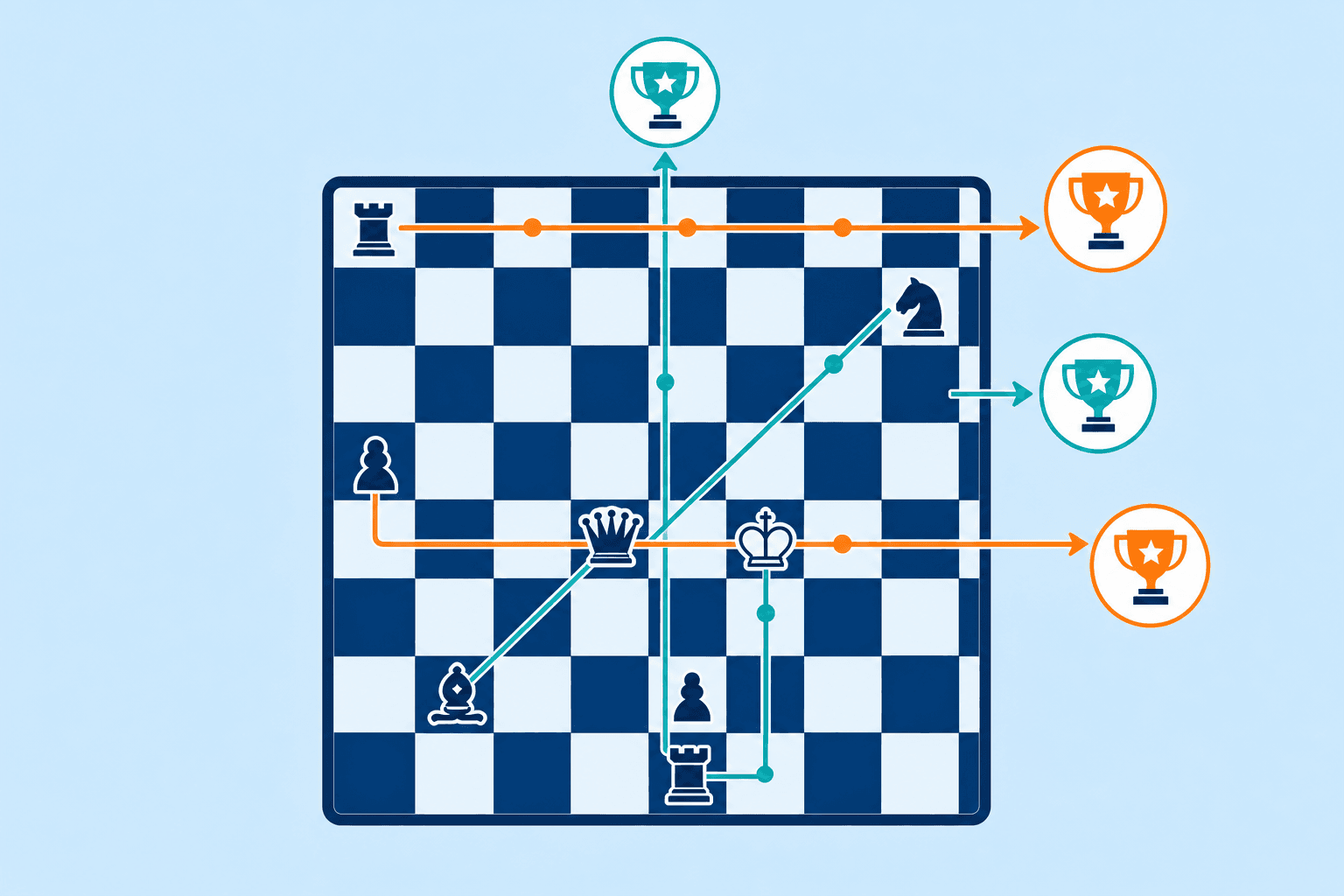
You're staring at your phone, scrolling through sweepstakes on PlayOtter, and a question hits you: Should I enter this one?
One contest is offering a $10,000 grand prize but requires 50 entries to be competitive. Another has a $50 prize pool but only needs one entry to win. Your daily entry budget is limited. Which one deserves your attention?
This is the decision that separates casual sweepers from strategic players. And unlike luck, this part you can actually control. The right contest selection framework isn't about picking winners—it's about choosing which sweepstakes give you the best return on your time and entries based on real math, not hope.
Understanding the Two Sweepstakes Archetypes
Before you can choose strategically, you need to recognize what you're actually looking at.
High-entry, low-odds sweepstakes are the big-prize contests. Think $5,000 cash giveaways, luxury electronics, or dream vacation packages. They attract thousands of entries. To have a realistic shot, you might need 20, 50, or even 100+ entries to be in the running. These are the contests that make you feel like you're really playing.
Low-entry, high-odds sweepstakes are the opposite: smaller prizes ($10–$200 range), fewer total entries, or better odds explicitly stated. You might win with just one or two entries. These feel less glamorous, but the math is different.
Here's the critical insight: neither is objectively better. Your strategy depends on three factors: your available entries, your risk tolerance, and what you're actually trying to win.
The Math Behind Entry Allocation
Let's cut through the noise with actual numbers.
Say you have 20 entries to spend today. You could throw all 20 at a $10,000 grand prize sweepstakes that expects 500 total entries. That gives you a 4% chance at the top prize (20 out of 500)—better than most lotteries, but still a long shot.
Or you could split those 20 entries across five different low-odds sweepstakes, each with a $50 prize and 100 expected entries. Each entry gives you a 1% chance at that specific prize. But across five contests, you've created five separate winning opportunities.
The key metric is expected value per entry. Here's the formula:
(Prize Value) × (Your Win Probability) = Expected Value Per Entry
For the high-entry contest: $10,000 × 0.04 = $400 expected value
For each low-entry contest: $50 × 0.01 = $0.50 expected value per entry
But wait—you're entering five of them. $0.50 × 5 = $2.50 total expected value across all five.
This looks like the high-entry contest wins. And mathematically, it does. But this assumes you have accurate entry counts, which you usually don't. And it assumes you can afford to "lose" all 20 entries on one shot without feeling frustrated.
When to Go All-In on High-Prize Sweepstakes
High-entry, low-odds contests make sense when:
You have surplus entries. If PlayOtter gives you 50 daily entries and you're only using 20, you've got room to experiment. Throwing 15 entries at a big-prize sweepstakes costs you nothing you weren't already spending.
The odds are actually published and favorable. Some sweepstakes explicitly state "1 in 500" or show entry counts in real-time. If you can verify the math and it's better than you expected, that changes the calculation. Compare this to free lotto games vs. traditional lottery where odds transparency matters just as much.
You're chasing a specific prize. If you genuinely want that $5,000 cash prize (not just any win), then concentrating entries makes sense. You're optimizing for one outcome, not total wins.
The prize pool is unusually large relative to entries. A $10,000 prize with only 200 expected entries is mathematically different from the same prize with 5,000 entries. Do the math before committing.
The Action Step
Before entering a high-prize sweepstakes:
- Find or estimate the total number of entries expected
- Calculate your probability: (your entries) ÷ (total entries)
- Multiply that by the prize value
- Ask: "Is this expected value worth the entries I'm spending?"
When Low-Entry Sweepstakes Are Your Better Play
Low-prize, high-odds contests are underrated—and they're your best bet when:
You're building a consistent win streak. Winning $50 twice feels better than losing on a $5,000 shot, even if the expected value is similar. Momentum is real. Small, frequent wins keep you engaged and motivated to keep playing. This is why our sweepstakes consistency story resonates so strongly—it's built on steady entries across multiple contests, not one big bet.
You have limited entries. If you only get 10 entries daily, spreading them across multiple high-odds contests gives you more chances to win something. One win of $50 beats zero wins of $5,000.
You're new to sweepstakes. Low-pressure, high-odds contests let you learn how sweepstakes work, how to fill out entries correctly, and what winning actually feels like—without the emotional letdown of losing big. Start with our beginner's checklist to make sure you're entering the right way.
You want to maximize your entry frequency. If you're following the principle of consistent, frequent entries, low-odds contests let you enter more contests total with the same entry budget.
The Action Step
Build a low-odds portfolio:
- Identify 5–10 sweepstakes with odds better than 1 in 500
- Enter each one with 2–3 entries
- Track which ones you win
- Rotate in new contests as old ones end
The Hybrid Strategy: Splitting Your Entry Budget
Here's what actually works for most experienced players: the 70/30 split (or whatever ratio feels right for you).
Allocate 70% of your daily entries to low-odds sweepstakes where you have genuine winning chances. Build that win momentum. Feel the satisfaction of regular payouts.
Allocate 30% to high-prize contests that catch your eye. You're not betting your whole strategy on them, but you're in the game. If one hits, it's a bonus—not a lifeline.
This approach:
- Keeps you engaged with frequent wins
- Doesn't leave you chasing one big prize
- Lets you experiment with high-odds contests without regret
- Balances expected value with psychological satisfaction
The math works because you're optimizing for two things: actual winnings and sustained motivation. A strategy that makes you quit is worse than a slightly lower expected-value strategy that keeps you playing.
Common Mistake: The "One Big Win" Trap
Here's what trips up most new sweepstakes players: they see a $10,000 prize and throw all their entries at it, ignoring the entry count.
Then they lose. And they feel like sweepstakes don't work. And they quit.
The trap isn't the high-prize contest itself—it's mistaking a long shot for a strategy. A $10,000 sweepstakes with 10,000 expected entries is a 0.1% chance per entry. That's not a strategy; that's a lottery ticket.
The fix: Before you get excited about a prize, get curious about the entries. Ask:
- How many people typically enter this?
- What does the entry requirement actually say?
- Am I entering because the math makes sense, or because the prize looks cool?
If it's the second one, it's fine to enter—just don't bet your whole daily budget on it.
Quick Tips Recap
- Calculate expected value: (Prize) × (Your win probability) = what this entry is worth
- High-prize sweepstakes work when: you have surplus entries, odds are published and good, or you're chasing a specific prize
- Low-odds sweepstakes work when: you have limited entries, you're building momentum, or you're new to sweepstakes
- Use the 70/30 split: allocate most entries to high-odds contests, reserve some for big-prize shots
- Track your results: over time, you'll see which types of contests actually pay off for you
Start Building Your Contest Selection Framework
The sweepstakes you enter today should be based on math, not just hope. That doesn't make winning guaranteed—sweepstakes are games of chance, after all. But it does mean every entry you make is working harder for you.
Start by auditing the sweepstakes you're currently entering. Which ones have you actually won? Which ones do you enter out of habit? Which ones are you chasing emotionally? Then reorganize around the framework that makes sense for your entry budget and goals.
Ready to put this strategy into practice? Download PlayOtter to access a curated mix of high-odds and high-prize sweepstakes, and start building your winning portfolio today.
Related Articles
The Sweepstakes Entry Volume Diminishing Returns Threshold: Why Playing 50 Games Daily Wins Less Than Playing 12—And How to Calculate Your Personal Saturation Point
You've been playing sweepstakes for weeks now. You wake up, open your app, and grind through 50 games before breakfast. You're entering everything—every new con...
The Sweepstakes Entry Frequency Goldilocks Zone: How to Find Your Optimal Play Schedule Without Triggering Win-Rate Penalties
You've probably noticed something frustrating: when you play sweepstakes every single day, your wins dry up. But when you take a break for a few weeks, suddenly...
The Sweepstakes Entry Win Streak Timing Pattern: How to Recognize When You're Hot and Capitalize Before Your Luck Cycle Resets
You've been playing sweepstakes for a few weeks now, and something weird happened: you won three times in five days. Then nothing for two weeks. Then a win. The...
Ready to Put This Into Practice?
PlayOtter gives you free daily entries to real cash prize sweepstakes. No purchase necessary — just play and win.